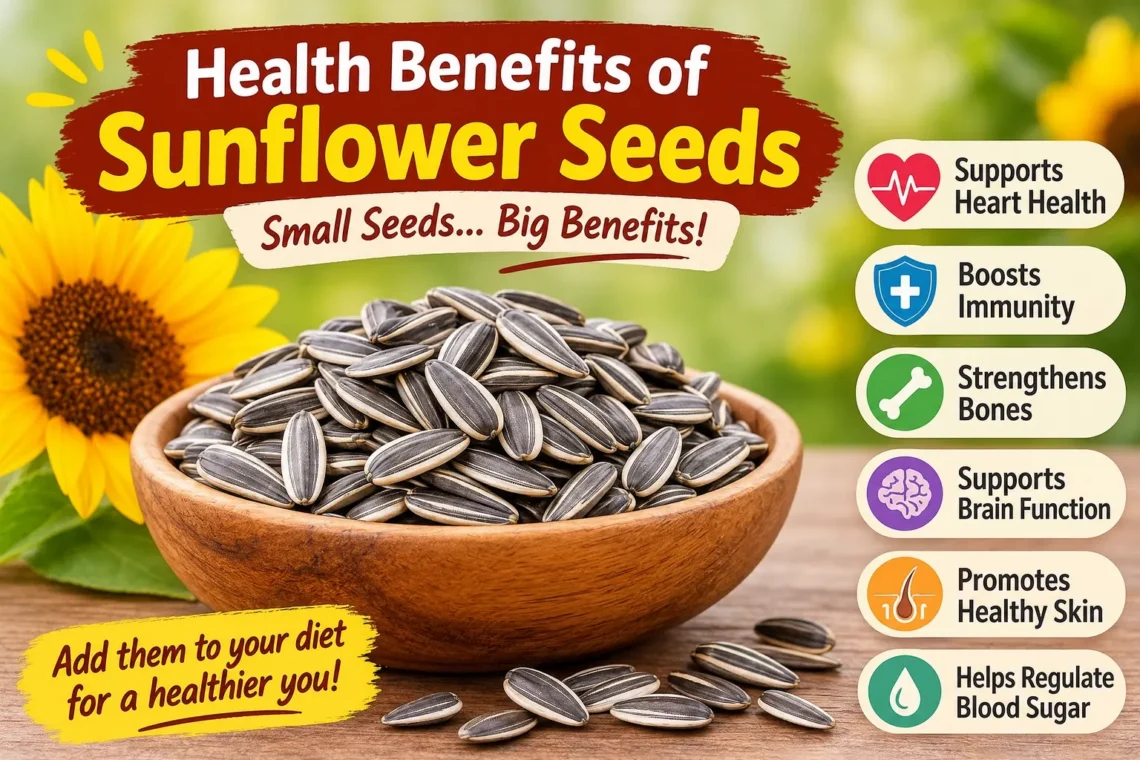
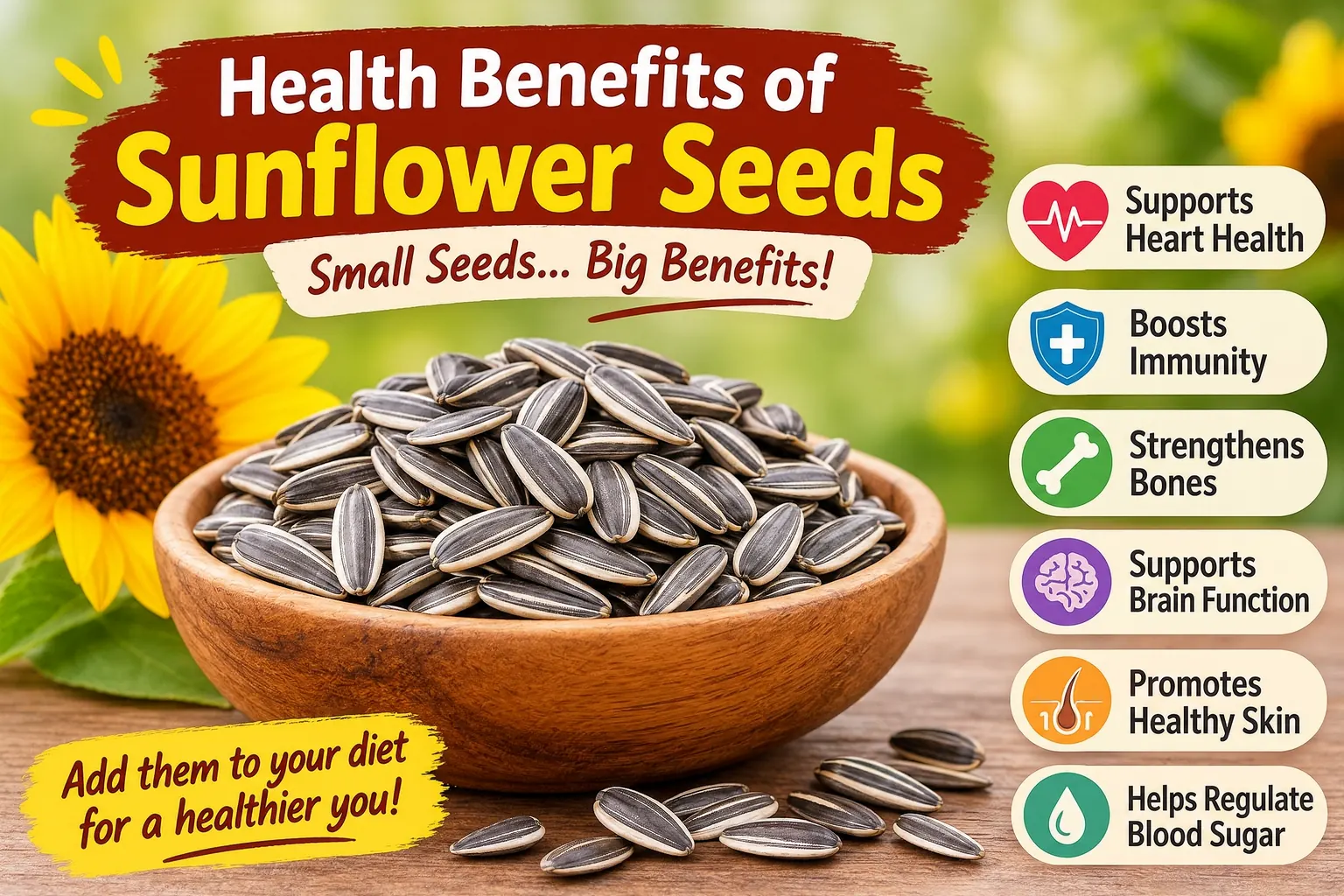
They are small, crunchy and easy to carry in a pocket, but sunflower seeds are far more than a snack. The health benefits of sunflower seeds range from better heart health to stronger immunity and healthier skin, all from a food that costs very little and fits into almost any diet.
In this guide, you will learn what is inside sunflower seeds, the key ways they support your body, how much to eat each day, and a few things to watch out for.
Sunflower Seeds Nutrition Facts
Before looking at the benefits, it helps to know what you are getting. A one-ounce (about 28 g) serving of shelled sunflower kernels typically provides roughly:
- Calories: about 165
- Protein: about 5.5 g
- Healthy fats: about 14 g, mostly polyunsaturated and monounsaturated
- Fibre: about 3 g
- Vitamin E: around half of the daily value
- Selenium: about one-third of the daily value
- Magnesium: roughly one-fifth of the daily value
- Also rich in: vitamin B1 (thiamine), vitamin B5, folate, copper, manganese, phosphorus and zinc
Values are approximate and vary by brand and preparation. Check the label on your product.
9 Health Benefits of Sunflower Seeds
1. Packed With Vitamin E, a Powerful Antioxidant
Sunflower seeds are one of the best natural food sources of vitamin E. This fat-soluble vitamin helps protect your cells from oxidative stress, supports immune function, and plays a role in keeping skin and eyes healthy.
2. Support Heart Health
The fats in sunflower seeds are mostly unsaturated, which is the kind linked to better cholesterol levels when they replace saturated fats in your diet. Sunflower seeds also contain magnesium, which helps regulate blood pressure, and plant compounds called phytosterols, which may help reduce the absorption of cholesterol.
3. May Help Reduce Inflammation
Vitamin E, flavonoids and other plant compounds in sunflower seeds have antioxidant properties. Diets rich in nuts and seeds are consistently associated with lower markers of chronic inflammation, which is linked to heart disease, type 2 diabetes and other long-term conditions.
4. Boost Your Immune System
Sunflower seeds provide selenium and zinc, two minerals your immune system relies on. Selenium helps your body produce protective antioxidant enzymes, while zinc supports the development and function of immune cells.
5. Help Stabilise Blood Sugar
With fibre, protein and healthy fats but very little carbohydrate, sunflower seeds digest slowly and do not cause sharp blood sugar spikes. Their magnesium content is also relevant, since low magnesium intake is associated with a higher risk of type 2 diabetes. Adding seeds to meals can make the whole meal more blood-sugar friendly.
6. Strengthen Bones and Muscles
Magnesium, phosphorus, copper and manganese all contribute to bone structure, while magnesium also supports normal muscle and nerve function. The protein in sunflower seeds adds to your daily intake, which is especially helpful for vegetarians and vegans.
7. Promote Healthy Skin
Vitamin E, zinc and healthy fats all help maintain the skin barrier and protect it from damage caused by sun exposure and pollution. Regularly eating foods rich in these nutrients supports skin from the inside, though seeds are no substitute for sunscreen.
8. Support Digestion
The fibre in sunflower seeds feeds good gut bacteria and helps keep digestion regular. Eating them with plenty of water makes the fiber work even better.
9. Support Mood and Energy
Sunflower seeds contain B vitamins, magnesium and tryptophan, nutrients involved in energy metabolism and in the production of mood-regulating brain chemicals. They will not replace professional care, but they can be part of a balanced diet that supports steady energy.
How Many Sunflower Seeds Should You Eat Per Day?
A sensible portion is about one ounce (a small handful, or roughly 1/4 cup of shelled kernels) per day. This delivers the benefits without adding too many calories, since sunflower seeds are energy-dense.
Easy Ways to Add Sunflower Seeds to Your Diet
- Sprinkle them over salads, soups or avocado toast
- Stir them into oatmeal, yoghurt, or smoothie bowls
- Blend them into homemade granola or energy bars
- Add them to bread, muffins and pancake batter
- Use sunflower seed butter as a nut-free alternative to peanut butter
- Toast them lightly in a dry pan to bring out a nutty flavour
- Mix them into stir-fries or pasta for extra crunch
Precautions: Who Should Be Careful?
Sunflower seeds are safe for most people, but keep these points in mind:
- Watch the sodium. Salted, in-shell varieties can contain a lot of sodium. Choose unsalted or lightly salted options, especially if you have high blood pressure.
- Mind the calories. A handful is healthy; eating a whole bag is not.
- Sunflower seed allergy is uncommon but real. Stop eating them and seek medical advice if you notice itching, swelling or breathing difficulty.
- Sunflower plants naturally absorb cadmium from soil. Eating a moderate daily portion is considered fine, but variety in your diet is wise.
- Do not swallow the hard shells, as they can irritate the digestive tract.
- Medical conditions. If you take medication or manage a health condition, check with your doctor or a registered dietitian about your intake.
Frequently Asked Questions
Are sunflower seeds good for you?
Yes. Eaten in moderation, sunflower seeds are a nutrient-dense food that provides vitamin E, selenium, magnesium, fiber, protein and healthy fats.
Are raw or roasted sunflower seeds healthier?
Both are nutritious. Raw seeds retain all their natural nutrients, while dry-roasted seeds have a richer flavor. The main thing is to avoid heavily salted or oil-roasted versions.
Can sunflower seeds help with weight loss?
The protein, fibre, and fat in sunflower seeds keep you feeling full, which can help control appetite. They work best as a measured portion in a balanced diet, because they are high in calories.
Are sunflower seeds good for your heart?
Their unsaturated fats, magnesium and phytosterols all support heart health, particularly when they replace foods high in saturated fat or refined carbohydrates.
Is it okay to eat sunflower seeds every day?
For most people, yes. A daily one-ounce serving is a reasonable amount.
Read More : Oatmeal benefits for Skin You must know
Final Thoughts
The health benefits of sunflower seeds come from a rare combination of vitamin E, selenium, magnesium, fibre, protein and heart-friendly fats in one affordable snack. Eat a small handful a day, choose unsalted varieties, and use them to upgrade the meals you already enjoy.
This article is for general information only and is not medical advice. Speak to a qualified healthcare professional about your individual dietary needs.