In 2026, every woman wants healthy, long, and thick hair. Healthy, thick, and shiny hair is something many of us dream about. But if you’ve noticed that nowadays everyone is suffering from excessive hair fall, thinning hair, slow growth, or more hair on your brush than usual, you might be wondering whether your body is getting all the nutrients it needs.
While hair oils, shampoos, and hair serums can help improve the appearance of your hair, healthy hair also starts from within. Your body needs certain vitamins, minerals, and nutrients to support normal hair growth and maintain healthy hair follicles. You can also follow a daily hair care routine as well.
Vitamins for Hair Growth and Thickness
The good news? You can get many of these nutrients from everyday foods. Let’s explore the best vitamins for hair growth and thickness, what they do, and how to include them in your daily diet.
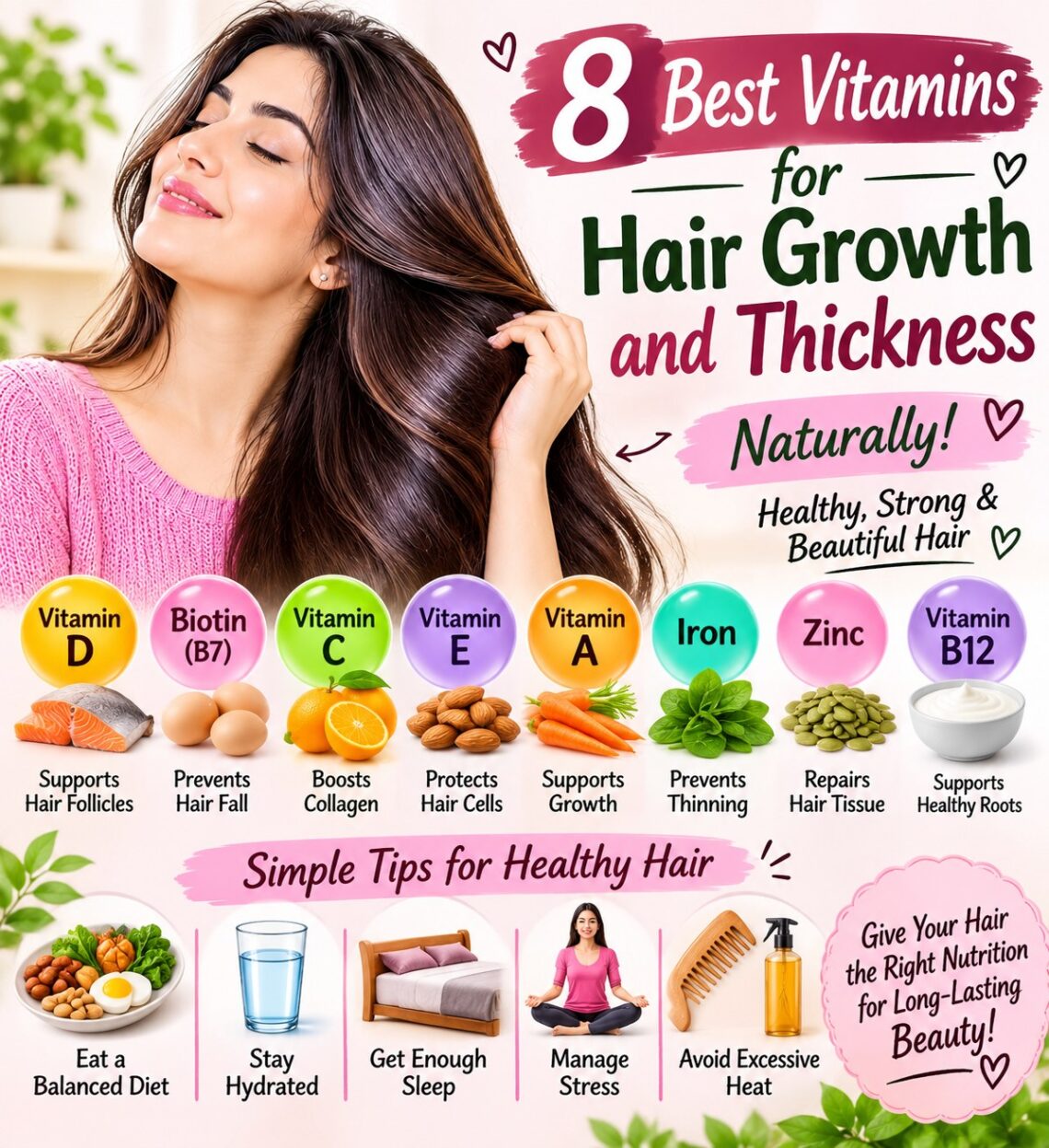
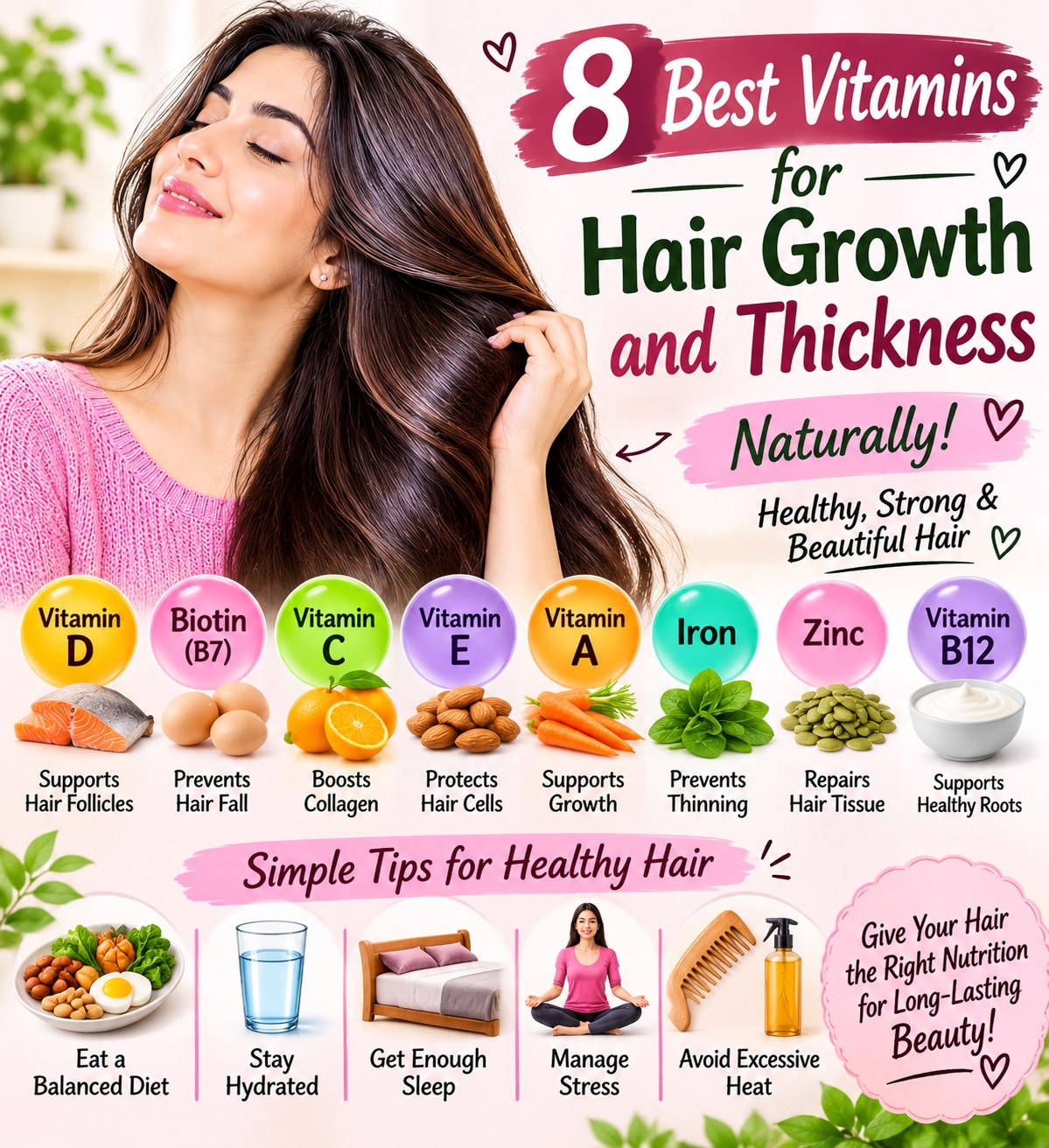
1. Vitamin D – Supports Healthy Hair Follicles
Vitamin D plays an important role in several body functions, including the normal hair growth cycle. Low vitamin D levels have been associated with certain types of hair loss. If you spend most of your time indoors or get limited sunlight, your vitamin D levels may be worth checking.
Best food sources:
- Egg yolks
- Fatty fish like salmon and sardines
- Fortified milk
- Fortified cereals
- Mushrooms exposed to UV light
Beauty tip: Include vitamin D-rich foods in your regular diet and ask your healthcare professional whether you need a vitamin D test.
2. Biotin (Vitamin B7) – Important for Normal Hair Health
Biotin is one of the most popular vitamins found in hair growth supplements. It helps your body process carbohydrates, fats, and proteins. A genuine biotin deficiency can cause hair thinning and hair loss. However, most people who eat a balanced diet get enough biotin, and there is limited scientific evidence that extra biotin improves hair growth when levels are already normal.
Best food sources:
- Eggs (cooked)
- Almonds
- Walnuts
- Sweet potatoes
- Salmon
- Oats
Beauty tip: Include biotin-rich foods in your meals instead of automatically reaching for high-dose supplements.
3. Vitamin C – Supports Collagen Production
Vitamin C is an important antioxidant that helps protect cells from oxidative stress. It helps you to supports collagen production, which is important for healthy skin and connective tissues. Another important benefit is that vitamin C helps your body absorb iron from plant-based foods. This makes it especially useful when planning a balanced diet.
Best food sources:
- Oranges
- Amla (Indian gooseberry)
- Guava
- Strawberries
- Kiwi
- Bell peppers
- Lemons
Beauty tip: Add fresh amla, guava, or oranges to your daily diet for a natural vitamin C boost.
4. Vitamin E – Helps Protect Cells from Oxidative Stress
Vitamin E is an antioxidant that helps protect your cells from oxidative damage. It supports overall health, including healthy skin.
Although vitamin E is often promoted in hair-care products and supplements, there isn’t strong evidence that taking extra vitamin E directly increases hair growth.
Best food sources:
- Almonds
- Sunflower seeds
- Hazelnuts
- Spinach
- Avocados
- Vegetable oils
Beauty tip: Add a handful of almonds or sunflower seeds to your breakfast or afternoon snack.
5. Vitamin A – Supports Normal Cell Growth
Vitamin A is essential for normal cell growth and helps maintain healthy skin. Since your scalp is skin too, getting enough vitamin A is important for overall scalp health.
However, more is not better. Too much vitamin A, particularly from high-dose supplements, can actually contribute to hair loss.
Best food sources:
- Carrots
- Sweet potatoes
- Spinach
- Pumpkin
- Mangoes
- Eggs
Beauty tip: Enjoy colourful vegetables regularly rather than taking extra vitamin A supplements without medical advice.
6. Iron – Important for Healthy Hair Growth
Iron is an essential mineral that helps your body produce haemoglobin, which carries oxygen throughout the body.
Low iron levels can contribute to hair shedding, particularly in women. This is one nutritional issue worth discussing with a healthcare professional if you experience unexplained hair thinning.
Best food sources:
- Spinach
- Lentils (dal)
- Chickpeas
- Beans
- Pumpkin seeds
- Meat and seafood
Beauty tip: Combine plant-based iron sources with vitamin C-rich foods. For example, enjoy dal with lemon or spinach with tomatoes.
7. Zinc – Supports Hair Tissue Growth and Repair
Zinc is an essential mineral involved in cell growth, tissue repair, and normal immune function. It also plays a role in maintaining healthy hair follicles.
Severe zinc deficiency can cause hair loss, but taking extra zinc when you already get enough is unlikely to improve hair growth.
Best food sources:
- Pumpkin seeds
- Chickpeas
- Cashews
- Eggs
- Dairy products
- Meat and seafood
Beauty tip: Add pumpkin seeds, nuts, and legumes to your everyday meals for a simple nutritional boost.
8. Vitamin B12 – Supports Healthy Red Blood Cells
Vitamin B12 helps your body produce red blood cells and supports normal nerve function and DNA production.
A deficiency can contribute to anaemia and other health problems. Although vitamin B12 is sometimes marketed as a hair-growth vitamin, taking extra B12 has not been proven to increase hair growth in people with normal levels.
Best food sources:
- Milk
- Yogurt
- Eggs
- Fish
- Chicken
- Fortified plant-based milk
Beauty tip: If you follow a vegetarian or vegan diet, pay attention to your B12 intake. Fortified foods or supplements may be necessary.
Foods to Include in Your Diet for Thicker, Healthier Hair
You don’t need an expensive hair-care diet. A balanced eating routine with enough protein, healthy fats, vitamins, and minerals is a great place to start.
Here are some simple foods to include:
| Food | Nutritional benefits |
|---|---|
| Amla | Vitamin C |
| Almonds | Vitamin E and biotin |
| Spinach | Iron and vitamin A |
| Eggs | Protein, biotin and B12 |
| Pumpkin seeds | Zinc and iron |
| Lentils | Plant protein and iron |
| Sweet potatoes | Beta-carotene |
| Yogurt | Protein and B12 |
Daily Habits That Support Healthy Hair Growth
Along with a nutritious diet, your everyday hair-care habits also matter.
1. Eat Enough Protein
Hair is primarily made of a protein called keratin. Include protein-rich foods such as eggs, lentils, paneer, yoghurt, fish, and beans in your meals.
2. Avoid Excessive Heat Styling
Frequent use of straighteners, curling irons, and high-heat blow dryers can damage your hair and cause breakage. Use lower heat settings and a heat protectant.
3. Be Gentle While Combing
Avoid pulling or brushing your hair aggressively, especially when it is wet. Use a wide-tooth comb and gently remove tangles.
4. Keep Your Scalp Clean
Wash your hair according to your scalp type and activity level. Choose a shampoo that suits your scalp and avoid excessive product buildup.
5. Get Enough Sleep
A consistent sleep routine supports overall health and well-being. Try to maintain a regular sleeping schedule.
6. Manage Everyday Stress
Long-term stress can contribute to excessive hair shedding in some people. Walking, yoga, meditation, and relaxing activities may help you manage stress.
Read More: The Top 10 Foundations for Sensitive Skin
Read More: 5 Health Benefits of Beetroot and Pomegranate Juice
Do Hair Growth Vitamins Really Work?
Yes, vitamins and minerals are important for normal hair growth, but supplements are not a magic solution for everyone.
If your hair loss is due to a nutritional deficiency, correcting it may improve hair health and reduce shedding. However, if your vitamin levels are already normal, taking additional supplements may not provide noticeable benefits.
Hair thinning can also happen because of hormonal changes, genetics, thyroid conditions, illness, certain medications, and scalp problems.
If you are experiencing persistent or excessive hair fall, consult a dermatologist. They may recommend blood tests to check for possible nutritional deficiencies or other underlying causes.
Important Things to Remember Before Taking Hair Supplements
Before purchasing any hair growth vitamins, keep these points in mind:
- Avoid taking iron supplements without confirming that you need them.
- High-dose biotin can interfere with certain laboratory test results.
- Too much vitamin A and selenium may contribute to hair loss.
- Avoid combining multiple hair supplements without checking their ingredients.
- If you are pregnant, breastfeeding, or taking medication, consult your healthcare professional before starting supplements.
Remember, a balanced diet is usually the best starting point for getting the nutrients your body needs.
Frequently Asked Questions (FAQs)
1. Which vitamin is best for hair growth and thickness?
There isn’t one single best vitamin. Vitamin D, biotin, vitamin C, and other nutrients support normal body and hair functions. Correcting a deficiency may help if it is contributing to hair loss.
2. Does biotin help hair grow faster?
Biotin helps support normal body functions, and severe deficiency can cause hair loss. However, there is limited evidence that biotin supplements improve hair growth in people who are not deficient.
3. Which vitamin deficiency causes hair fall in women?
Low iron and vitamin D levels have been associated with certain types of hair loss. Other nutritional deficiencies may also contribute, depending on the individual.
4. Can vitamin D improve hair thickness?
Vitamin D deficiency has been associated with some hair-loss conditions. Correcting a confirmed deficiency may help, but supplements are not a guaranteed treatment for hair thinning.
5. How long does it take to see results from better nutrition?
Hair growth is gradual. If nutritional deficiency is contributing to hair shedding, improvement may take several months after the deficiency is corrected. Results depend on the underlying cause.
6. Can I take biotin, zinc, and vitamin D together?
These nutrients can be taken together in some circumstances, but the right amount depends on your diet, health, and existing deficiencies. Consult a healthcare professional before combining supplements.
Final Thoughts
Beautiful, healthy-looking hair starts with consistent care, balanced nutrition, and patience. Instead of spending money on every hair growth supplement you see online, focus on giving your body the nutrients it actually needs.
Include vitamin-rich foods, eat enough protein, take care of your scalp, and avoid harsh hair treatments. If you’re experiencing unusual hair fall or thinning, don’t ignore it—finding the underlying cause is the most important step.
Remember: Healthy hair is not about taking more vitamins; it’s about giving your body the right nutrition and care. ❤️