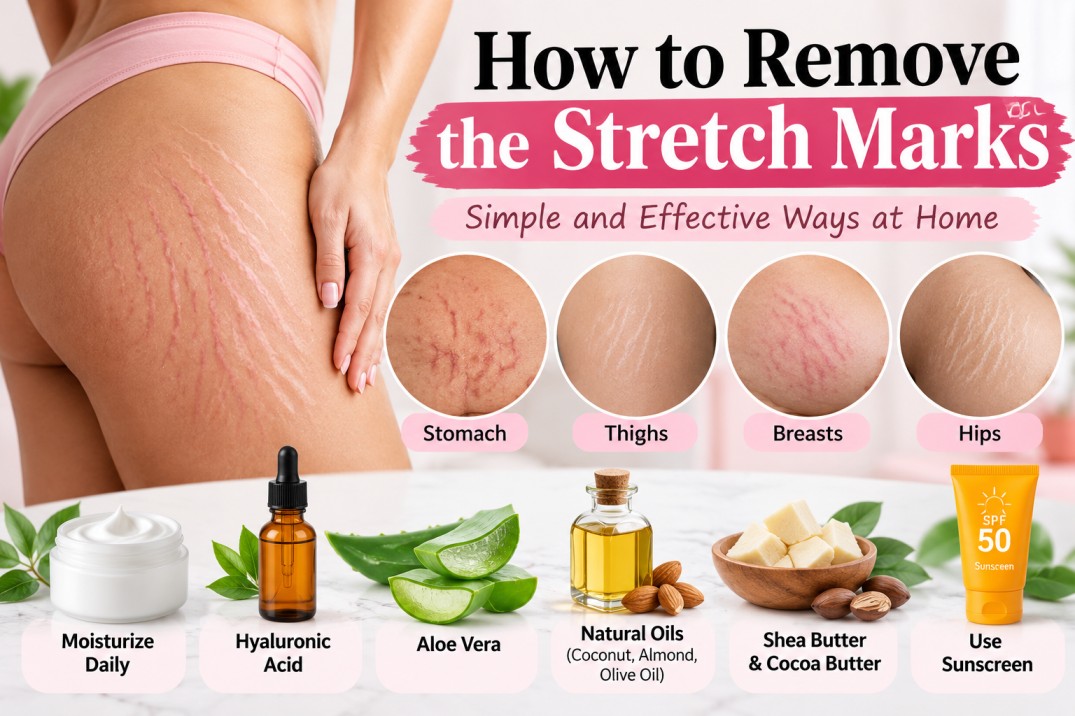
Stretch marks are extremely common at all ages, but you may notice them more after pregnancy, weight loss changes, puberty, or muscle growth. They often appear on the stomach, thighs, hips, breasts, buttocks, or upper arms or legs.
If you are also dealing with this and looking for ways to remove stretch marks, there is one important thing to know first: stretch marks usually cannot be completely erased. The good news is that they often fade naturally over time, and certain treatments can make them much less noticeable.
How to remove the stretch marks
Here is a simple guide to understanding stretch marks and what you can realistically do about them.
What Are Stretch Marks?
Stretch marks are lines or streaks that develop when the skin changes or stretches quickly.
New stretch marks may look red, pink, purple, brown, or darker than the surrounding skin. As they get older, they usually become lighter and less noticeable.
Stretch marks are generally harmless and don’t require medical treatment.
What Causes Stretch Marks?
Stretch marks can happen to almost anyone. Some of the most common reasons include:
- Pregnancy
- Rapid weight gain or weight loss
- Puberty and growth spurts
- Fast muscle growth
- Genetics
- Certain hormonal changes or medical conditions
- Some corticosteroid medications
Your skin type and family history can also affect how your skin responds to them.
How to Remove Stretch Marks at Home
Let’s start with realistic expectations. There is no proven home remedy that can completely remove stretch marks.
However, taking good care of your skin and treating newer stretch marks early may help make them less noticeable.
-
Keep Your Skin Moisturized
Using a moisturizer every day can keep your skin soft, smooth, and comfortable.
Look for a body lotion or cream that contains hydrating ingredients such as:
- Hyaluronic acid
- Ceramides
- Glycerin
- Shea butter
Moisturizer won’t erase stretch marks, but it can improve the overall look and feel of dry skin.
-
Try Hyaluronic Acid
Hyaluronic acid is well known for helping skin hold moisture.
There is some evidence that applying hyaluronic acid to early stretch marks may help make them less noticeable.
Apply it consistently according to the product instructions and follow with a moisturizer.
-
Consider Retinoids for New Stretch Marks
Prescription tretinoin, a type of retinoid, may help improve newer stretch marks by supporting collagen production.
It tends to work better on newer marks than older white or silver ones.
Because tretinoin can irritate the skin and isn’t appropriate for everyone, speak with a dermatologist before using it.
Important: If you’re pregnant or breastfeeding, talk to your healthcare provider before using retinoid products.
-
Moisturize With Natural Oils—But Keep Expectations Realistic
Coconut oil, almond oil, cocoa butter, olive oil, and vitamin E are popular choices for stretch marks.
These products can moisturize dry skin and may make it feel softer, but research has not shown that they reliably remove existing stretch marks.
So enjoy them as moisturizers rather than expecting them to erase the marks.
-
Protect Your Skin From the Sun
A tan does not remove stretch marks. In fact, tanning may make them stand out more because stretch marks can respond differently to tanning than the surrounding skin.
When the area is exposed to sunlight, use a broad-spectrum sunscreen and follow the directions on the label.
Do Home Remedies Really Remove Stretch Marks?
You’ve probably seen DIY remedies involving lemon juice, sugar, coffee, cocoa butter, vitamin E, or different oils.
Be careful with claims that promise to “erase stretch marks naturally.”
Popular home remedies such as cocoa butter, olive oil, almond oil, and vitamin E haven’t been shown to reliably fade stretch marks.
A better approach is to focus on keeping your skin healthy and hydrated while using evidence-based treatments when appropriate.
What Works Better for Older Stretch Marks?
Older stretch marks are usually lighter, white, or silver and can be more difficult to improve with topical products.
If they bother you, a board-certified dermatologist may recommend professional treatments such as:
Microneedling: Tiny needles create controlled micro-injuries in the skin, encouraging collagen production.
Laser or light therapy: Different types of laser and light treatments may stimulate collagen or improve the appearance of stretch marks.
Microdermabrasion: This treatment works on the skin’s surface and may help improve its texture.
Chemical peels or radiofrequency treatments: Depending on your skin and stretch marks, a dermatologist may suggest other cosmetic procedures.
These treatments can make stretch marks less noticeable, but they still cannot guarantee complete removal.
A Simple Daily Routine for Stretch Marks
You don’t need a complicated 10-step skincare routine.
Morning: Gently cleanse the area, apply a hydrating product such as hyaluronic acid if desired, follow with moisturizer, and use sunscreen when the skin will be exposed.
Evening: Cleanse gently and apply a rich moisturizer. If your dermatologist has prescribed tretinoin or another treatment, use it exactly as directed.
Consistency is more important than constantly changing products.
How Long Does It Take for Stretch Marks to Fade?
Be patient with your skin.
Stretch marks often become less noticeable naturally over time. Treatments can also take weeks or months before you see meaningful changes.
Newer stretch marks generally respond better to treatment than older ones, so starting early may give you a better chance of improving their appearance.
Can You Prevent Stretch Marks?
Unfortunately, there is no guaranteed way to prevent stretch marks.
Keeping your skin moisturized is still useful for maintaining comfortable, healthy-looking skin, but don’t assume that a particular cream or oil can guarantee stretch-mark prevention.
Rapid body changes can sometimes contribute to stretch marks, but pregnancy, puberty, genetics, and other factors aren’t always under your control.
When Should You See a Dermatologist?
Stretch marks themselves are usually harmless.
However, consider talking to a healthcare professional if they suddenly appear without an obvious reason, cover a large area of your body, or you’re concerned about changes in your skin.
You should also see a dermatologist if you want stronger treatment options such as prescription retinoids, microneedling, or laser therapy.
Final Thoughts
If you’ve been wondering how to remove stretch marks, remember that completely removing them usually isn’t realistic.
Instead, focus on making them less visible.
Start with simple skincare: keep your skin moisturized, consider ingredients such as hyaluronic acid for newer marks, protect exposed skin from the sun, and give your routine time to work.
For stubborn or older stretch marks, a dermatologist can help you explore treatments such as microneedling or laser therapy.
Most importantly, don’t feel pressured by products promising overnight results. Stretch marks are a very common type of skin change, and gradual improvement is a much more realistic goal.
FAQs
Can stretch marks go away completely?
Usually, no. Stretch marks often fade over time, but they may not disappear completely.
What is the best way to remove stretch marks?
There isn’t one treatment that works best for everyone. Newer stretch marks may respond to treatments such as hyaluronic acid or prescription tretinoin, while older marks may need professional procedures for more noticeable improvement.
Does cocoa butter remove stretch marks?
Cocoa butter is a good moisturizer, but research hasn’t shown that it reliably removes stretch marks.
Can vitamin E remove stretch marks?
Vitamin E can moisturize the skin, but there isn’t strong evidence that applying it can remove existing stretch marks.
Does microneedling work for stretch marks?
Microneedling is one of the professional treatments dermatologists use to make stretch marks less noticeable. It works by stimulating collagen production.
Are stretch marks harmful?
In most cases, no. Stretch marks are generally harmless and don’t require treatment unless you want to improve their appearance.
Read More: Best Razors for Women with Sensitive Skin
Read More: 5 Benefits of Moringa Leaves Oil